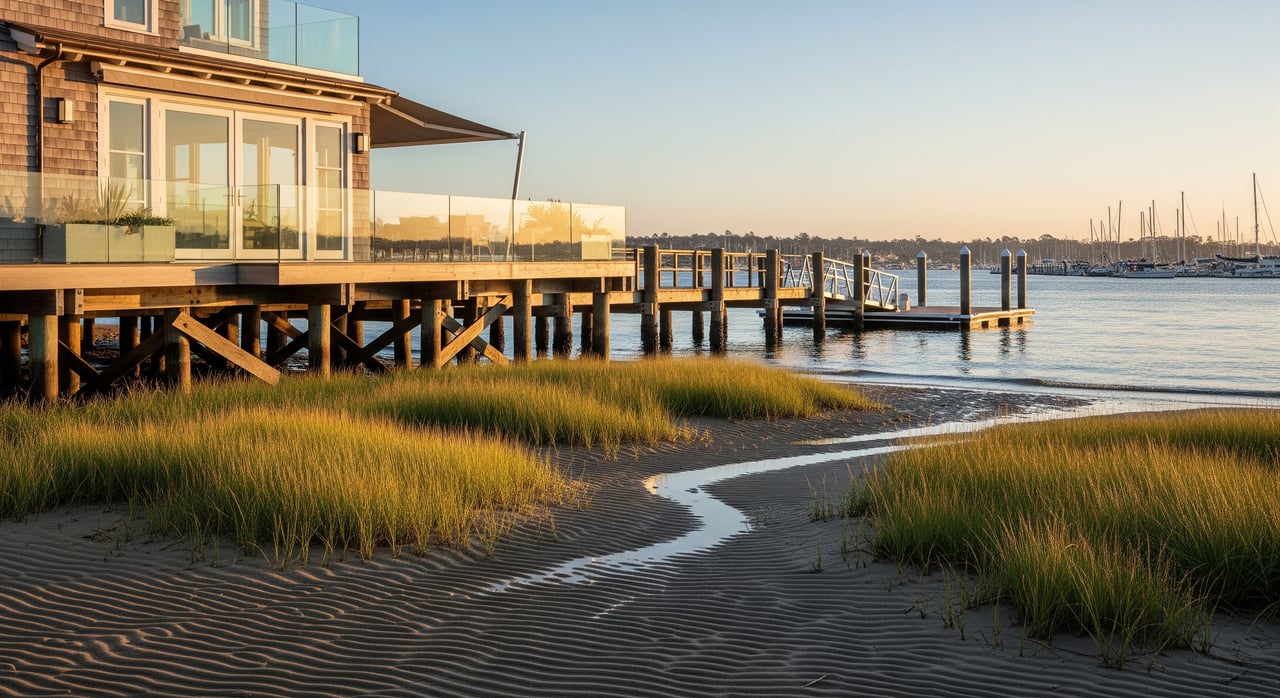
Picture this: you find a dream home on Balboa Island or Lido Isle with a sparkling dock out back. Do you own the dock, the water under it, and the right to keep your boat there? In Newport Beach, the answer is not always simple. Many waterfront features sit on land the State holds in trust, or they are controlled by the City.
This guide breaks down fee simple ownership, leasehold interests, and tidelands in plain English. You will learn how these rules affect docks, moorings, financing, permitting, and resale value. If you are buying near the harbor, this is the knowledge that protects your investment. Let’s dive in.
Fee simple, leasehold, and tidelands basics
Fee simple on the coast
Fee simple is the most complete form of private ownership in the U.S. Along the coast, your fee-simple parcel often ends at the mean high tide line rather than the visible water’s edge at low tide. Your deed and recorded map show the boundary, but a modern survey can confirm it.
You may have littoral rights such as access to the water and boating use. Those rights still sit alongside the State’s authority below the mean high tide line.
Leasehold interests in the harbor
A leasehold gives you the right to use land or water space you do not own in fee. In Newport Harbor, leaseholds commonly cover docks, piers, and slips over submerged land. Leaseholds come with specific terms like rent, renewal, and assignment rules that can affect resale and lending.
Lenders, appraisers, and title companies treat leasehold interests differently than fee-simple ownership. Expect extra document review and sometimes tighter loan terms.
Tidelands and the mean high tide line
In California, land below the mean high tide line is generally sovereign land held in trust for the public. The California State Lands Commission manages these sovereign lands, issues leases, and oversees municipal tidelands grants. You can explore programs and policies on the State Lands Commission’s website at the California State Lands Commission.
Surveyors determine the boundary using tidal datums. NOAA explains these datums and provides local station data at NOAA Tides & Currents.
How Newport Beach handles waterfront
City and State roles
The City of Newport Beach manages harbor operations, including mooring permits and many local rules for docks and marinas. Find departments and contact information at the City of Newport Beach. The State Lands Commission retains jurisdiction over sovereign lands and maintains lease and easement records.
Balboa and Lido patterns
Newport Harbor’s islands and edges were shaped by historic fills, which created many of today’s residential lots. Some waterfront homes have private docks or boat lifts. Others use structures that sit partly or entirely on sovereign land, which may be leased from the City or State or managed through an HOA.
Deeds and recorded maps sometimes show grant lines or the mean high water line. Do not assume “waterfront” means you own the dock or the water beneath it.
Docks, slips, and moorings
- City-managed moorings typically require permits and have rules about transfer and use.
- Private marina slips may be deeded in rare cases, assigned by an HOA, or rented from an operator.
- Any dock or pier seaward of mean high water usually needs a State lease and coastal permits for construction or replacement.
Confirm status with both the City and the State before you rely on a dock, mooring, or slip for daily use or valuation.
What ownership means for your dock or slip
How to confirm if it is owned or leased
Start with your preliminary title report and the recorded deed. Look for references to tidelands, grants, or easements. If the property is in a condo or planned community, review the HOA’s CC&Rs and any slip assignment or exclusive-use agreements.
For clarity on the water boundary, order an ALTA survey that shows the mean high water line and the location of bulkheads, seawalls, and docks.
If the dock is leased
Lease terms drive everything: duration, rent, renewals, transfer rights, and maintenance. Obtain the full lease and fee schedule. If you plan to sell later, confirm whether the lease can be assigned and what approvals are required.
Short, revocable, or non-transferable leases can be a resale risk. Lenders may also apply stricter underwriting or lower loan-to-value ratios.
Permits for building or replacing
Any work seaward of mean high water usually requires approvals. Expect to coordinate with the City, the State Lands Commission, and coastal authorities. Learn about coastal permitting at the California Coastal Commission. For sovereign land leases and approvals, consult the California State Lands Commission.
Depending on scope, you may also need federal or environmental review. Plan timelines accordingly.
Financing, appraisal, and insurance
Lending on leasehold and marina elements
Many lenders require that lease terms extend beyond the loan maturity or include renewals that protect the lender. They will review rent schedules, assignability, and any HOA rules governing slips. Some will cap loan-to-value or adjust rates for leasehold risk.
In condominiums, project approval can hinge on marina elements, HOA finances, and how slips are structured. A deeded slip often carries more appraised value than a non-transferable mooring or a rented slip.
Insurance and hazards
Waterfront parcels may require flood coverage. Docks, seawalls, and boats often need separate policies or endorsements. If a dock sits on leased or HOA-controlled areas, review who pays for repairs and what liability coverage is required.
Big-ticket marina repairs or seawall projects can lead to special assessments, which matter for value and lending.
HOA overlays to understand
In many Newport Beach waterfront communities, slips are common elements or limited common elements managed by an HOA. The CC&Rs and rules dictate allocation, transfer, renting, and maintenance responsibilities. Review reserve studies, meeting minutes, and any plans for marina or seawall work.
California’s common-interest rules require disclosures and strong governance. Lenders will examine an HOA’s financial strength and infrastructure liabilities closely.
Due diligence checklist
Use this checklist to protect your position before you write an offer or remove contingencies:
- Order a full preliminary title report. Scrutinize exceptions for tidelands, sovereign lands, leases, and easements.
- Commission an ALTA/boundary survey showing the mean high water line and the location of docks, seawalls, and bulkheads. Reference tidal datums from NOAA Tides & Currents.
- Request copies of any State or City leases, permits, or mooring agreements tied to the property or structure. Confirm fees, terms, renewals, and transfer rights.
- If an HOA is involved, review CC&Rs, bylaws, marina rules, reserve studies, recent minutes, and any planned special assessments.
- Contact the City for mooring status, waiting lists, and harbor permits using the City of Newport Beach.
- Check State lease or easement records with the California State Lands Commission.
- Discuss coastal permitting timelines and requirements with the California Coastal Commission.
- Speak with a title underwriter experienced in tidelands issues and ask about tidelands endorsements.
- Pre-qualify with a lender who understands leasehold and waterfront underwriting.
- Confirm insurance needs across homeowners, flood, and marine policies.
Red flags that warrant extra caution
- No recorded lease but long-term use of a dock or pier over sovereign land.
- Short, revocable, or non-assignable leases that expire before or soon after loan maturity.
- Slips treated as personal property with no recorded real property interest.
- HOA power to reassign slips at will or thin reserves for marina repairs.
- Broad title exceptions for “public trust” or “sovereign lands” with no clarifying endorsements.
Plan your Newport Harbor strategy
With the right due diligence, you can enjoy the harbor lifestyle without surprises. Focus on the boundary line, the presence of any City or State lease, and the HOA’s rules and reserves. Align those facts with lending, insurance, and your long-term boating needs.
If you want a seasoned guide who knows the Newport Harbor playbook, connect with the Carter Kaufman Team. We will help you structure a clean offer, pressure-test the details, and negotiate from strength so you can Work With A Deal Maker®.
FAQs
What does “tidelands” mean in Newport Beach?
- Tidelands are sovereign lands below the mean high tide line held by the State of California for public trust uses, managed by the California State Lands Commission.
How do I know if my dock is leased or owned?
- Review the deed, preliminary title report, and an ALTA survey for boundary lines, then obtain any City or State leases and HOA slip agreements to confirm status.
Are mooring permits in Newport Harbor transferable when I buy a home?
- Transfer rules depend on current City policies and specific permits. Verify the latest requirements with the City of Newport Beach before you rely on a transfer.
Will lenders finance homes with leased docks or slips?
- Many will, but they require lease review, proof of assignability or renewal, and may adjust loan-to-value or terms to account for leasehold risk.
Do I need permits to replace a dock or seawall?
- Work seaward of mean high water generally requires coastal approvals and often a sovereign land lease or authorization. Start with the California Coastal Commission and the California State Lands Commission.
Why do appraisals value deeded slips more than rented slips?
- A deeded slip typically conveys a transferable real property interest that enhances market value. Rented or non-transferable use generally carries less valuation weight.