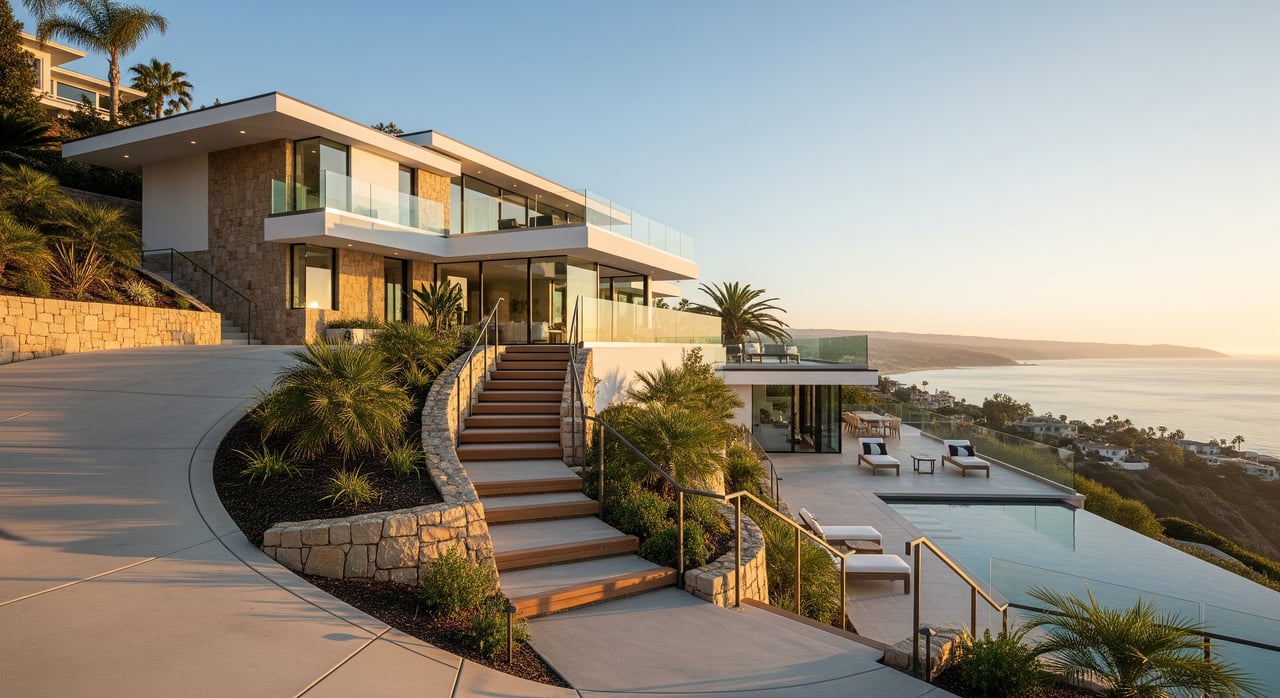
Is that sweeping ocean view worth the uphill grind to your front door? In Temple Hills, you balance daily convenience with the kind of panorama that stops conversations. If you are eyeing Laguna Beach hillside homes, you need a clear picture of how slope, access, and garage design affect day-to-day living and long-term value. This guide breaks down what to look for so you can buy with confidence. Let’s dive in.
Temple Hills at a glance
Temple Hills sits above Laguna Beach on steep terrain with ridgelines, terraces, and homes set into the hillside. Elevation can deliver dramatic ocean and coastline views, yet access to the village varies from quick drives to steeper climbs. That difference shows up in your daily routine and in resale.
Hillside parcels often need engineered foundations, retaining walls, and specialized drainage. Orientation matters too. Homes on ridges can enjoy wider views while feeling more exposed to wind and wildfire conditions. Inset properties can trade a bit of view for privacy and shelter. For parcel-specific details, buyers typically rely on surveys, parcel maps, and city guidance from local planning and fire departments.
Driveway slope realities
Steep driveways are common in Temple Hills. The grade affects everything from parking to safety.
What slope means for daily life
- Gentle, about 0 to 5 percent: Easy walking and driving. Guest access is simple.
- Moderate, about 5 to 12 percent: Noticeable incline. Headlight glare and garage clearance can come into play.
- Steep, about 12 to 20 percent: Lower-gear driving on the way up. Rain requires more care. Guests and service vehicles may struggle.
- Very steep, over 20 percent: Can be impractical for some vehicles and a turnoff for certain buyers.
Steeper slopes can increase brake wear, speed storm runoff, and complicate trash pickup and deliveries.
Safety and function to consider
Emergency vehicle access, turning radii, and grade limits are often defined by local fire standards. Surface traction matters too. Textured paving, concrete finishes, or interlocking pavers with good cross-slope and drainage help reduce slipping and washout. Watch the angle where the driveway meets the garage. Sharp transitions can reduce usable garage height and cause bumper scrapes for low vehicles.
What to verify on site
- Measure or request the driveway grade and surface specs.
- Confirm emergency access standards for width, grade, and turnarounds.
- Test visibility and turning space for typical service and delivery vehicles.
- Ask about drainage, erosion control, and past repairs.
- Confirm guest parking and behavior during heavy rain.
Garage placement and design
Garage layout on a hillside can either simplify your life or complicate it.
Common setups in Temple Hills
- Front-entry garage on a slope: Street access is straightforward, but interior ramp angles and ceiling height can be tight.
- Tuck-under garage: Efficient use of space and curb appeal, often with adjacent retaining walls and specialized waterproofing.
- Below-grade or retained garage: May require robust drainage systems, sump pumps, and careful structural design to handle soil and water pressure.
Moisture and structural details
Water intrusion is a frequent concern for garages built into a slope. Look for proper waterproofing, engineered retaining walls, and well-maintained perimeter drains. Sump pumps and positive drainage away from foundations help, but they need regular maintenance. Unpermitted retaining walls are a red flag.
Daily usability
Ask yourself how easy it is to park, unload, and walk to the main living area. Stairs, covered paths, or lifts can improve comfort on very steep sites. If you drive a low-clearance vehicle, test the transition into the garage. Tight turning space also impacts moving larger items like furniture and appliances.
Due diligence questions
- Are permits available for the garage and any retaining walls?
- Is there a recent geotechnical report or documented slope stabilization?
- Any signs of water intrusion, staining, or efflorescence?
- Does the garage height accommodate today’s vehicles, and do approach angles work for your car?
Access roads and parking
Narrow, winding streets are part of the hillside experience. Understand how the road network supports your daily rhythm.
Public vs private roadways
Some streets are city-maintained while others are private. Private roads may be maintained by an HOA or a group of owners. That affects costs, parking rules, and enforcement. Confirm road ownership and maintenance obligations in title work and with the city.
Geometry, width, and parking rules
Limited sightlines, tight curves, and posted restrictions can impact street parking. Large delivery trucks may have trouble turning. While snow is rare, heavy rain can bring debris that temporarily slows access.
Emergency planning
Laguna Beach is in a wildfire-prone region. Confirm evacuation routes, assembly points, and whether roads serving the home meet local emergency standards. Ask about any exemptions or grandfathered access conditions.
Utilities and service logistics
Steep access can complicate utility routing, meter access, and garbage pickup. Verify whether trash is curbside or centralized, if utilities are overhead or underground, and how mail and parcel deliveries are handled.
Views vs access: how it affects value
Ocean and canyon views often command premiums in Laguna Beach, yet steeper access can narrow the buyer pool. Walkability to the village is a priority for some, while others prioritize privacy and vistas. Higher elevations sometimes sell for more but can take longer to find the right buyer if access is a trade-off.
Hillside ownership usually means higher maintenance. Expect ongoing attention to retaining walls, drainage, paving, and landscaping for erosion control. Insurance pricing and lending requirements can reflect wildfire exposure, slope stability, and access limitations. Unpermitted work can slow closings and weigh on value, so documentation matters.
To boost marketability, focus on visible, verified improvements. Permits, recent engineering reports, and clearly communicated access and parking details give buyers confidence. Practical upgrades that help include textured driveway surfaces, safe turnarounds, good lighting, solid handrails, and well-documented stormwater control.
Mitigation if you love a steep lot
If the view wins, you can often improve usability with the right plan and permits.
- Regrade or reconstruct the driveway with switchbacks where feasible.
- Upgrade surfaces with textured finishes or permeable pavers to reduce runoff.
- Engineer retaining walls and drainage for long-term stability.
- Consider terraced walkways with lighting and handrails, or approved lift solutions for pedestrian access.
Any hillside retrofit should begin with qualified engineering evaluation and city permits.
Quick buyer checklist for Temple Hills
- Request permits for driveway, garage, retaining walls, and slope work.
- Ask for geotechnical reports or the property’s slope repair history.
- Review maintenance records for paving, drainage, walls, and sump pumps.
- Confirm whether roads are public or private and any shared maintenance agreements.
- Verify trash and parcel pickup logistics plus parking restrictions.
- Plan inspections with hillside-experienced professionals.
- Drive the access route at busy times and during rain if possible.
- Test guest parking and your vehicle’s entry into the garage.
- Walk to village amenities to gauge the real uphill or downhill time.
How to choose your best-fit property
Start with your lifestyle. If daily walkability is nonnegotiable, prioritize lower-elevation or easier-access homes closer to the village. If panoramic views define your dream, focus on higher elevations and invest in the right mitigation to make access comfortable. Either way, factor in maintenance and insurance early and build your decision around verified permits, engineering, and clear disclosures.
When you are ready to move, partner with a team that blends negotiation skill with neighborhood-level insight. The Carter Kaufman Team represents buyers and sellers across coastal Orange County and brings a negotiation-first approach to protect your outcome. Book an appointment and let’s chart the smartest path to your next Laguna Beach home.
FAQs
What should I check first on a steep Temple Hills driveway?
- Ask for the measured grade, test your vehicle’s clearance, and verify drainage and emergency access requirements.
How do garage designs differ on hillside lots?
- Expect tuck-under or below-grade options with more emphasis on waterproofing, retaining walls, and drainage maintenance.
Are private roads common in Temple Hills and who maintains them?
- Some roads are private and are maintained by owners or HOAs, which affects costs and parking rules.
Do views at higher elevations change resale timelines?
- They can. Views often add value, but steeper access may narrow the buyer pool and sometimes lengthen time to sell.
What documents help de-risk a hillside purchase?
- Permits, recent engineering or geotechnical reports, maintenance records for drainage and retaining walls, and clear access and parking disclosures.