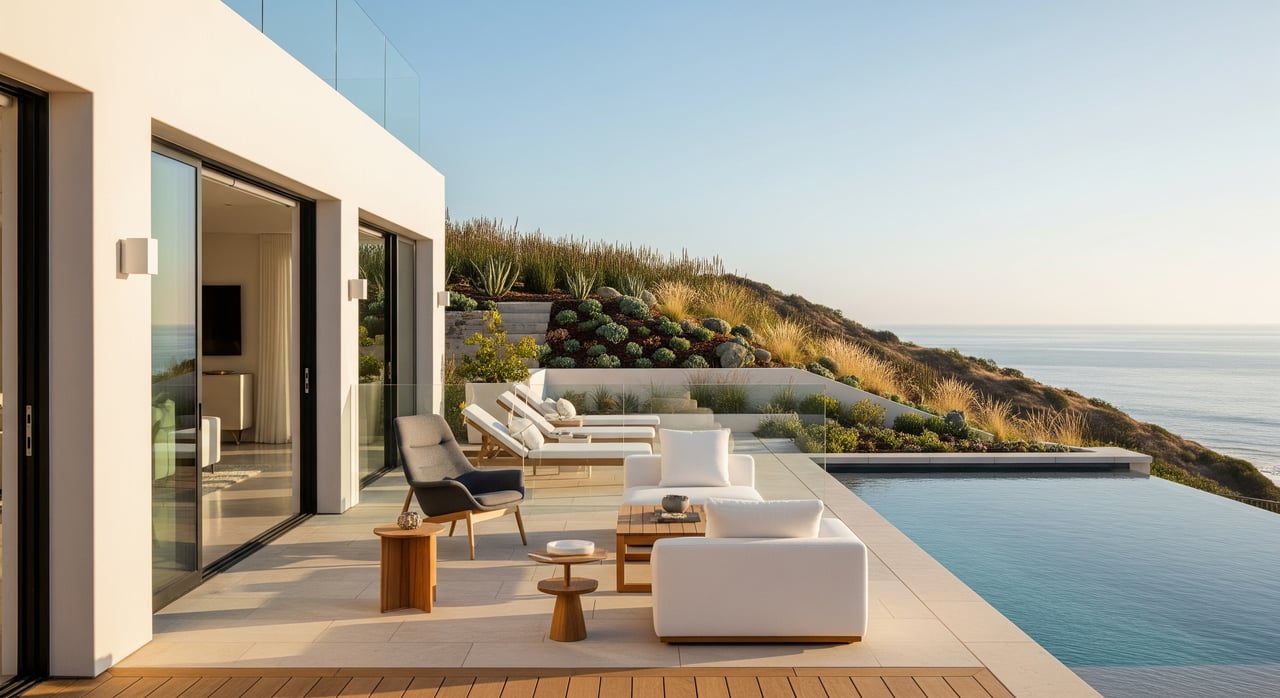
Are you torn between an ocean-facing view home and a quiet canyon retreat in Corona del Mar? You are not alone. In this coastal village, micro-location shapes value, lifestyle, and resale in ways that are easy to miss. This guide breaks down how exposure, lot type, and permitting affect your decision so you can buy or sell with confidence. Let’s dive in.
Ocean vs canyon exposure explained
How CdM is laid out
Corona del Mar sits on coastal bluffs above small beaches and a compact village along Pacific Coast Highway. You will see cliff-edge homes with dramatic views, elevated mesa streets with corridors to the water, and interior or canyon-oriented streets with larger lots and mature landscaping.
What exposure means here
- Ocean-facing exposure includes bluff-edge properties and upper mesa streets with direct or partial views. These emphasize views, breezes, and proximity to beaches, and often carry a prestige premium.
- Canyon-facing exposure orients toward interior canyons or ridgelines. These homes often deliver privacy, larger yards, and quieter streets, with limited or no ocean views.
Lot types and value drivers
Bluff and oceanfront lots
Bluff or cliff-edge parcels maximize views and status. They typically have narrower depths and vertical drop-offs. Expect a high view premium and limited expansion options. Buyers should account for geotechnical constraints and coastal rules that can affect remodels and decks.
Mesa and elevated streets
Flatter, buildable areas on top of the bluff offer ocean vistas with more usable outdoor space than true cliff-edge locations. These lots are a middle path for view, buildability, and everyday usability.
Interior and canyon parcels
Canyon-oriented lots often provide bigger footprints, mature trees, and flat yards. You may trade ocean exposure for privacy and space. For many families, a larger yard and quieter setting can outweigh the lack of a view.
Terrace and benched sites
Partial-slope lots can act like hybrids. Upper levels may capture views while lower levels and yards feel private and usable. Design and placement matter more here than on flat lots.
Risk, permits, and buildability
Bluff erosion and coastal hazards
Properties near the bluff face carry erosion and stability considerations. Setback rules and geotechnical studies often shape what you can add or rebuild. Coastal properties can also face long-term sea-level rise concerns and flood-zone mapping. These factors can influence insurance and lending, so verify insurability early.
Coastal permitting and approvals
In coastal zones, renovations and new builds may require reviews by local planning and the California Coastal Commission. Timelines and restrictions vary by lot type. Expect more scrutiny near the bluff and on steep or canyon lots with grading, retaining walls, and drainage work.
Zoning, FAR, and ADUs
Local zoning, setbacks, height limits, and floor-area ratios set your build envelope. Larger canyon lots and corner parcels often have more flexibility. Accessory dwelling units are encouraged statewide, but coastal and site constraints can affect placement on bluff or canyon parcels.
Lifestyle tradeoffs to consider
Walkability and beach access
Homes within easy walking distance to the CdM Village or the local beaches often command strong demand. A home can be highly walkable without a view. On the flip side, a spectacular view home can be less convenient to daily services or parking.
Streets, parking, and traffic
Narrow residential streets and popular beach zones can affect parking and ease of movement. Private parking and short walks to shops, dining, and beaches raise everyday livability.
Yards, privacy, and quiet
Canyon and interior lots often support larger, flatter yards with mature landscaping and less through traffic. These features appeal to buyers who prioritize outdoor living, privacy, and quieter streets.
Market patterns and resale
Who buys what
- Oceanfront and high-quality view buyers often focus on views, scarcity, and turnkey finishes. These homes see lower supply and strong competition when well priced.
- Canyon and interior buyers lean toward privacy, yard size, and more house for the price. Usable outdoor space can be a core value driver.
- Village and amenity-focused buyers prize walkability and will trade off view to be close to shops, dining, and the beach.
Price premiums and adjustments
Scarcity fuels view premiums, especially for full, unobstructed ocean views from main living areas. Condition matters. Updated view homes capture more of the premium than dated ones. Canyon homes often sell for lower price per square foot than comparable ocean-view homes, but larger lots and outdoor usability can level total value.
Liquidity and time on market
Top-tier oceanfront or unique properties attract attention but can take longer to match with the right buyer at high price points. Canyon and interior homes can see steadier local demand, with condition and layout driving days on market.
Short-term rental considerations
Short-term rental rules and enforcement in Newport Beach can affect income and resale positioning. Always confirm current city regulations and any HOA policies before assuming rental income.
How to choose your CdM micromarket
- Start with lifestyle: Do you value ocean views or outdoor space and privacy more? How important is a short walk to the village and beaches?
- Weigh buildability: Is your dream to remodel or add an ADU? Check zoning, setbacks, and coastal requirements relative to the lot type.
- Assess risk tolerance: Bluff proximity, slopes, and drainage influence cost, permitting, and insurance.
- Plan the exit: Think about who your future buyer will be for your exposure type. Documented view lines or yard advantages help resale.
Buyer due diligence checklist
- Pull true like-for-like comps by exposure tier: oceanfront, high-quality ocean view, partial view, and no view or walkable.
- Commission or review a recent geotechnical or bluff stability report for bluff-adjacent properties.
- Review flood maps and sea-level rise resources to understand current and long-term hazards.
- Confirm the property’s coastal and city permitting history, including any variances or bluff repair work.
- Verify insurance availability and premiums for coastal hazards, earthquake, flood, and standard homeowners coverage.
- Test walkability and parking during peak and off-peak times.
- Review HOA rules and any coastal easements or public access adjacent to the parcel.
Seller strategy checklist
- Segment comps by exposure tier and document differences with photos, aerials, and clear view-corridor visuals.
- Share recent geotechnical inspections and permitting history to build buyer confidence.
- Quantify walkability and beach proximity for interior homes that lack views.
- Price within clear tiers: oceanfront, ocean-view, walkable no-view, and canyon or private-lot, adjusting for condition and lot usability.
Data sources worth reviewing
- Local MLS for inventory, sold comps, days on market, and price trends.
- City of Newport Beach planning, building, and coastal permit records and maps.
- California Coastal Commission guidance on coastal development permits.
- Orange County Assessor records for lot size and parcel characteristics.
- FEMA flood maps and NOAA or state sea-level rise tools for hazard context.
- Newport-Mesa Unified School District boundary maps for objective attendance information.
- Local geotechnical and coastal engineering professionals for site-specific assessments.
Bottom line
Ocean-facing homes in Corona del Mar carry view-driven premiums and coastal permitting considerations. Canyon and interior homes trade some exposure for larger yards, privacy, and steady demand. Your best fit depends on lifestyle goals, risk tolerance, and long-term plans. If you want a clear plan for price, permits, and resale positioning, the Carter Kaufman Team can help you compare exposure tiers, validate comps, and negotiate the outcome you want.
Ready to map your next move in Corona del Mar? Connect with the Carter Kaufman Team to review tailored comps and a strategic plan.
FAQs
What does “ocean exposure” mean in Corona del Mar?
- It refers to properties oriented toward the Pacific, including bluff-edge homes and elevated streets with direct or partial views that benefit from breezes and proximity to beaches.
How do canyon-facing homes differ in daily living?
- Canyon homes often offer larger flat yards, mature landscaping, and quieter streets. They may trade ocean views for privacy and outdoor space.
Do ocean views always justify a higher price?
- Not always. Premiums depend on view quality, scarcity, and condition. Full, unobstructed views from main living areas are most consistent.
Are bluff-edge properties riskier to improve?
- They can be. Expect geotechnical studies, setback rules, and coastal permitting that influence feasibility and cost for additions or rebuilds.
How do I compare comps across exposure types?
- Segment sales into tiers like oceanfront, high-quality ocean view, partial view, no view or walkable, then adjust for condition, lot size, and usability.
What non-view features help resale without ocean exposure?
- Walkability to the village and beaches, larger flat yards, parking, updated interiors, and privacy can offset the lack of views.